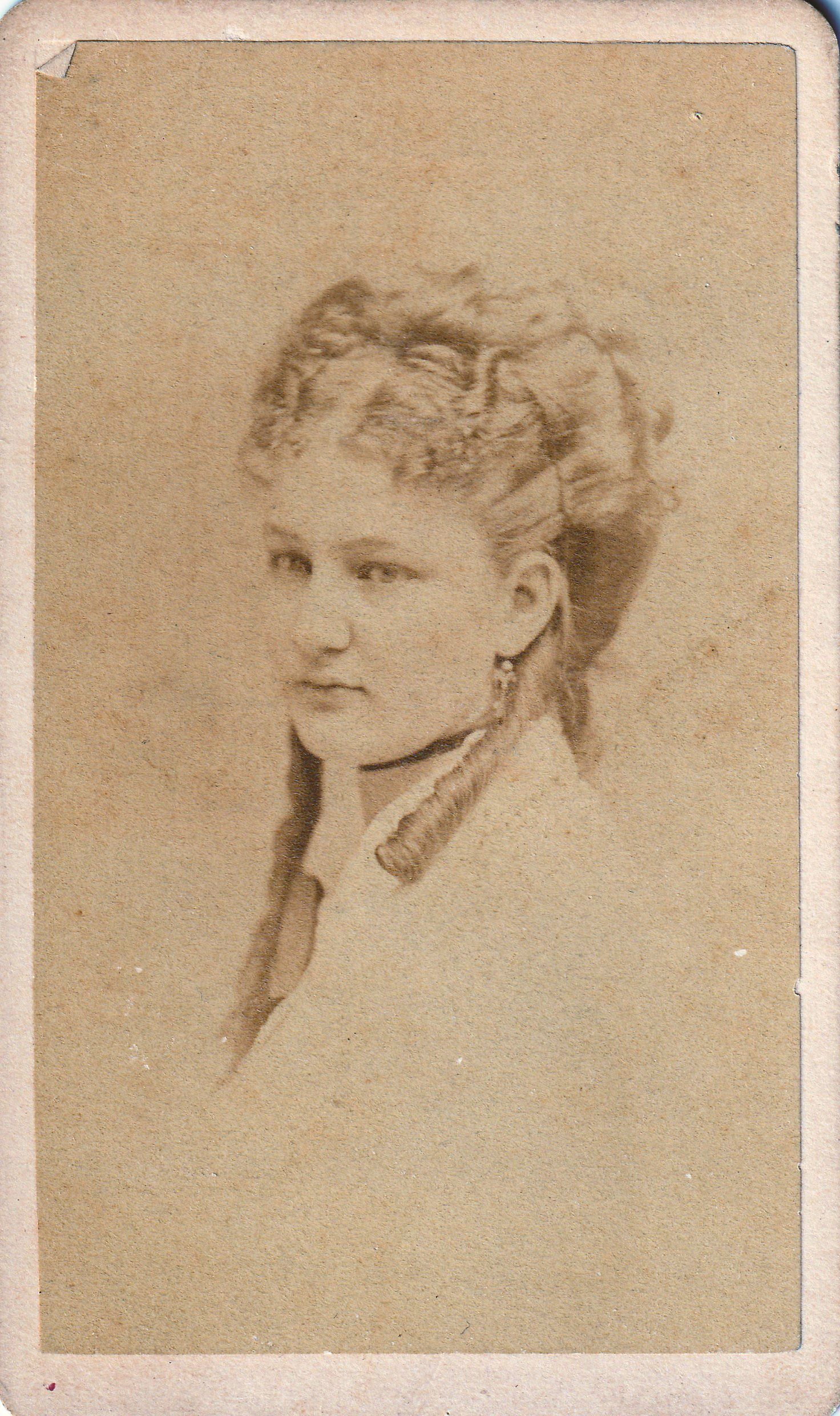
 Harriet Brainard aka Harriet Converse Tilden Brainard Moody (March 18, 1857 - February 22, 1932) was a prominent American businesswoman, legendary literary salon hostess,
and vital arts patron during the Chicago Literary Renaissance.
Harriet Brainard aka Harriet Converse Tilden Brainard Moody (March 18, 1857 - February 22, 1932) was a prominent American businesswoman, legendary literary salon hostess,
and vital arts patron during the Chicago Literary Renaissance.Queer Places:
Cornell University (Ivy League), 410 Thurston Ave, Ithaca, NY 14850
2970 S Ellis Ave, Chicago, IL 60616, USA
107 Waverly Pl, New York, NY 10011, USA
Graceland Cemetery, Chicago, Cook County, Illinois, USA
Harriet Brainard aka Harriet Converse Tilden Brainard Moody (March 18, 1857 - February 22, 1932) was a prominent American businesswoman, legendary literary salon hostess,
and vital arts patron during the Chicago Literary Renaissance.
Born Harriet Converse Tilden in Parkman, Ohio, on March 18, 1857, she moved with her family to Chicago around 1867. She attended the Quaker-run Howland School in New York and graduated with a degree in English Literature from Cornell University in 1876. Following a brief, unhappy first marriage to lawyer Edwin Brainard—which ended in divorce—she supported herself and her mother by teaching high school English in Chicago.
To supplement her income, Harriet launched a culinary venture in 1889 called the Home Delicacies Association. Beginning with chicken salad and gingerbread, her catering and food-service enterprise blossomed into an elite Chicago institution.
She employed roughly 50 workers, managing operations that supplied gourmet goods to Marshall Field’s department store, Pullman railway dining cars, and high-society private clients.
She later opened famous local dining spots, including Le Petit Gourmet (housed in Chicago's Italian Court on North Michigan Avenue).
Her business acumen allowed her to move comfortably in elite circles, rubbing shoulders with civic leaders like Bertha Honoré Palmer while supporting her household independently.
In 1899, through her friend and boarder Martha Foote Crow, Harriet met William Vaughn Moody, a poet, playwright, and English professor at the University of Chicago. They formed a deep, spiritually and intellectually matched partnership. Because of her mother's opposition, they delayed marriage until 1909. Tragically, William died of brain cancer just a year later in 1910.
Following his death, Harriet dedicated the remainder of her life to championing modern literature and poetry. Her homes—including her famous residence on Chicago's South Side (at Ellis Avenue), an apartment in Greenwich Village (107 Waverly Place), and a summer property in Massachusetts—became dynamic gathering hubs. She hosted legendary late-night poetry salons, welcomed international figures like Rabindranath Tagore, and helped fund and launch the groundbreaking magazine Poetry.
Harriet Moody died on February 22, 1932, having depleted much of her personal fortune in service of her artistic protégés.
While Harriet Moody was married to men (Edwin Brainard and William Vaughn Moody), her life, social circles, and professional networks were deeply intertwined with prominent women of the era—many of whom forged unconventional lives, independent professional paths, and queer or homosocial networks outside traditional Victorian constraints.
Martha Foote Crow was an educator, poet, scholar, and one of the early female pioneers in higher education. She served as an assistant professor of English literature at the University of Chicago and later as the dean of women at Northwestern University. Martha Foote Crow was a friend and boarder in Harriet's home during the 1890s. Crucially, it was Crow who introduced Harriet to William Vaughn Moody. Crow's life exemplified the "New Woman" ideal—unmarried professional women who created autonomous academic and domestic spaces. Her presence in Harriet’s early Chicago household helped lay the foundation for Harriet's lifelong immersion in literary circles.
Alice Corbin Henderson was a key modernist poet, editor, and critic. Along with Harriet Monroe, she served as an essential co-founder and associate editor of Poetry: A Magazine of Verse. Alice Corbin Henderson’s relationship with Harriet Moody began early: Henderson was one of the high school students Harriet taught in Chicago in 1889. Over the decades, their relationship evolved into a lifelong literary alliance. Henderson was a central fixture in the Chicago literary renaissance and a frequent participant in the creative networks that Moody fostered and sustained.
Olivia H. Dunbar was an author, essayist, and member of Heterodoxy, an influential, radically feminist, and pro-LGBTQ+ debating club based in Greenwich Village. Dunbar wrote short stories and biographical works, eventually marrying poet Ridgely Torrence. Olivia H. Dunbar was a close friend of Harriet Moody during her years splitting time between Chicago and Greenwich Village. Following Harriet's death, Dunbar cemented Harriet's historical legacy by writing her definitive biography, A House in Chicago (published in 1947). Dunbar’s biographical work carefully preserved the interior culture of Harriet's salon, detailing how women like Moody carved out powerful, matriarchal spaces of patronage that sheltered modern writers, freethinkers, and non-conformists.
References:
Support this project
This website is a passion project researched, developed, and funded entirely by me. If you find the content valuable and would like to help support the ongoing research and hosting costs, any contribution is deeply appreciated.
Thank you for keeping this independent resource alive!
My books on Amazon: Elisa Rolle's books